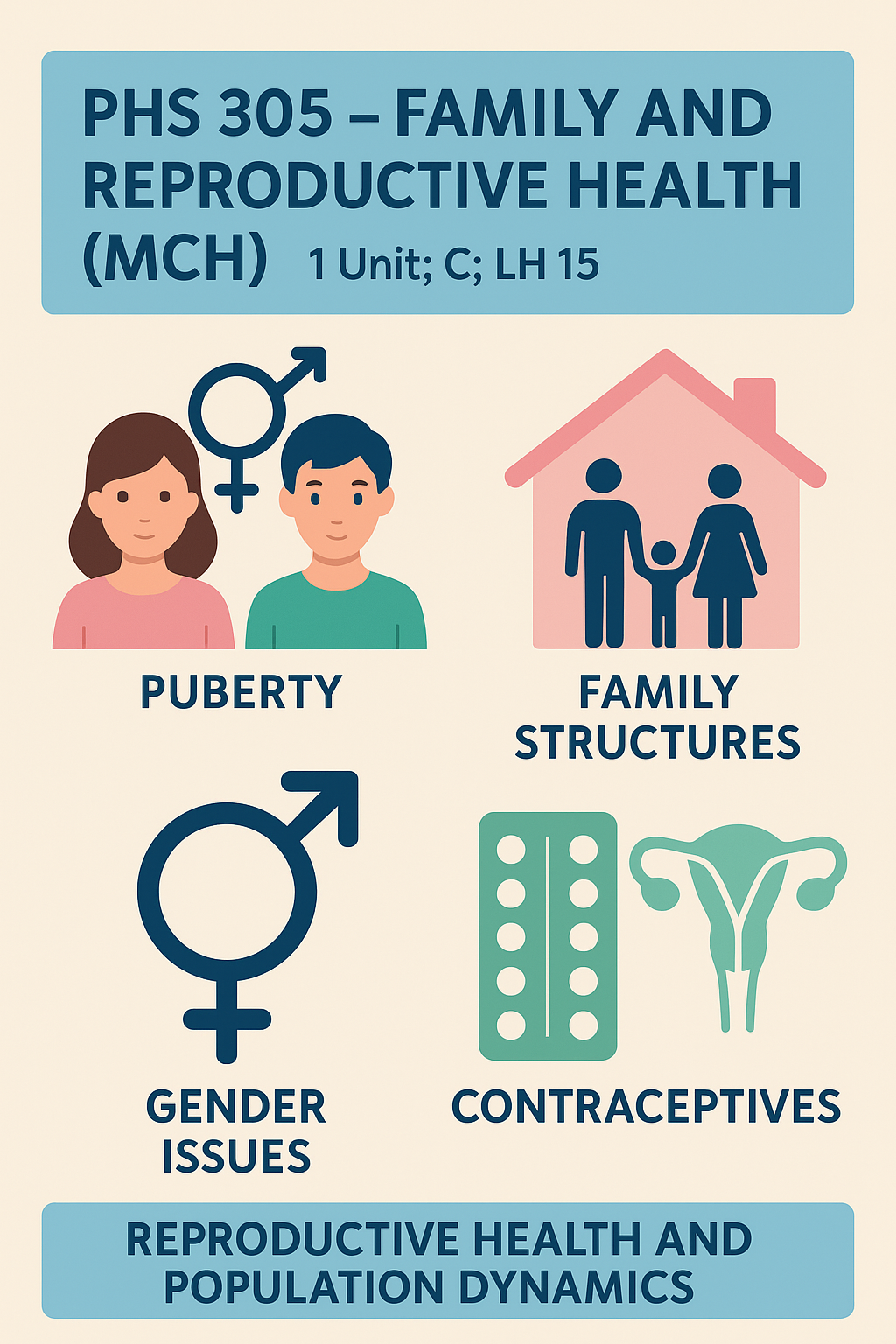
This course is designed to equip students with a comprehensive understanding of reproductive health and its significance within the broader context of public health. Emphasizing the importance of family health as a pillar of primary healthcare, students will explore various family structures and the implications these have on health practices.
Throughout the course, students will learn to define reproductive health and appreciate the scale of associated challenges. They will examine the intricate relationship between reproductive health and gender issues, gaining insight into how societal norms and preferences influence health outcomes.
The curriculum includes an in-depth look at the physical and emotional changes associated with puberty, providing students with the knowledge necessary to support individuals through this critical life stage. Students will also explore a range of contraceptive techniques, analyzing the advantages and potential issues linked to each method, thereby fostering informed decision-making in family planning.
Contemporary topics will be addressed, including the impact of gender preference, genital mutilation, and human sexuality, ensuring a holistic understanding of reproductive health and its implications for population dynamics. By the end of the course, students will be well-prepared to engage with reproductive health issues in their future practice and contribute meaningfully to public health initiatives.
- Teacher: Aliyu Muhammad