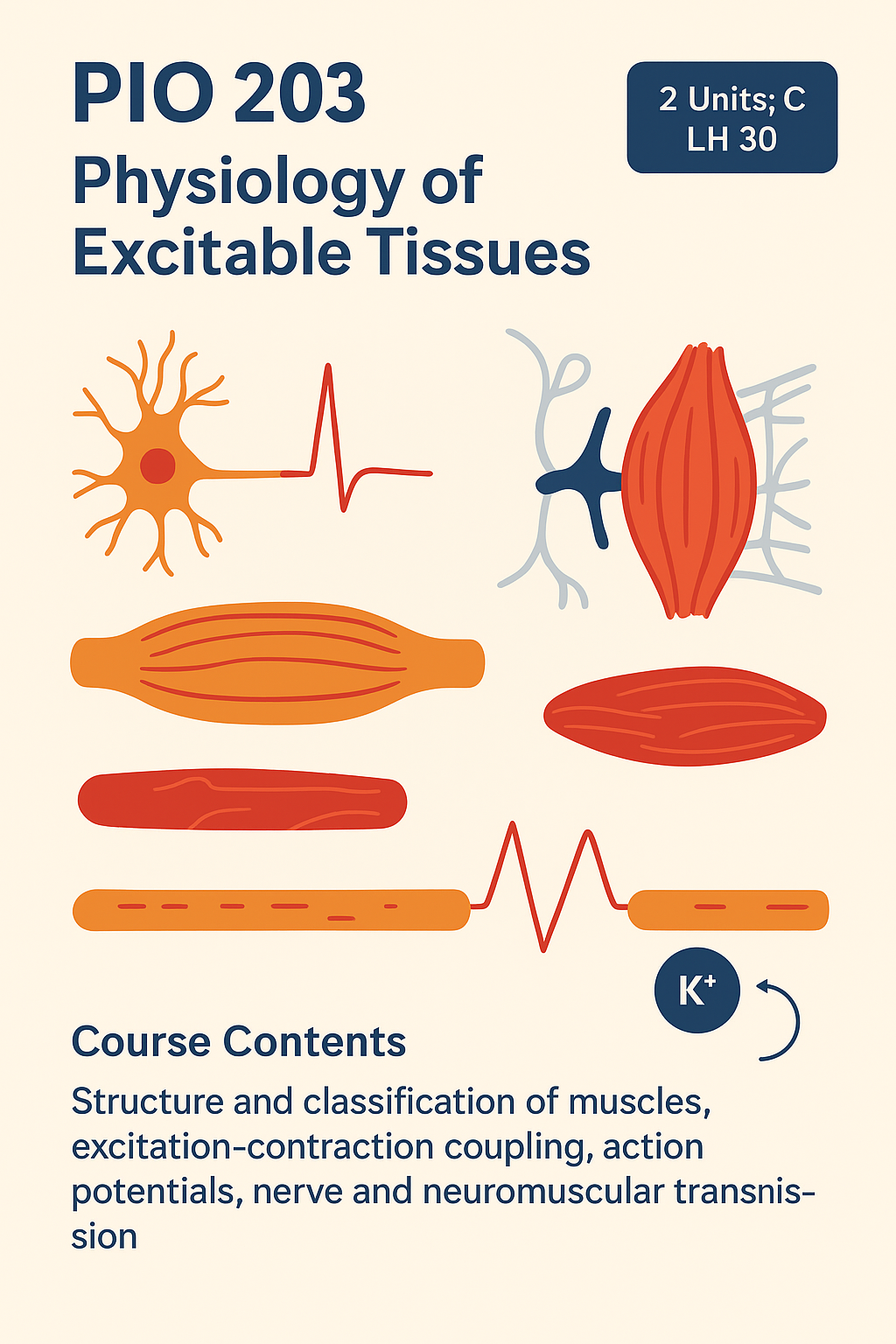
PIO 203: Physiology of Excitable Tissues
Unit(s): 2 Status: Core (C) Lecture Hours: 30
Course Overview
This course introduces students to the physiological properties and functions of excitable tissues—specifically nerves and muscles—which form the foundation of neural communication and muscle activity in the human body.
Students will explore how electrical signals are generated, transmitted, and translated into mechanical responses. Through understanding membrane potentials, action potentials, and excitation–contraction coupling, learners gain insight into the intricate mechanisms that underlie muscle contraction, reflexes, and nervous system control.
The course also highlights the differences among skeletal, smooth, and cardiac muscles, emphasizing their structural and functional characteristics. The neuromuscular junction is studied as a critical site for nerve–muscle communication, including common disorders that affect its function.
By the end of the course, students will understand how excitable tissues contribute to key physiological processes, including movement, reflex action, posture, and visceral regulation, laying the foundation for advanced studies in neurophysiology, pharmacology, and clinical medicine.
- Teacher: Aliyu Muhammad