Course Overview
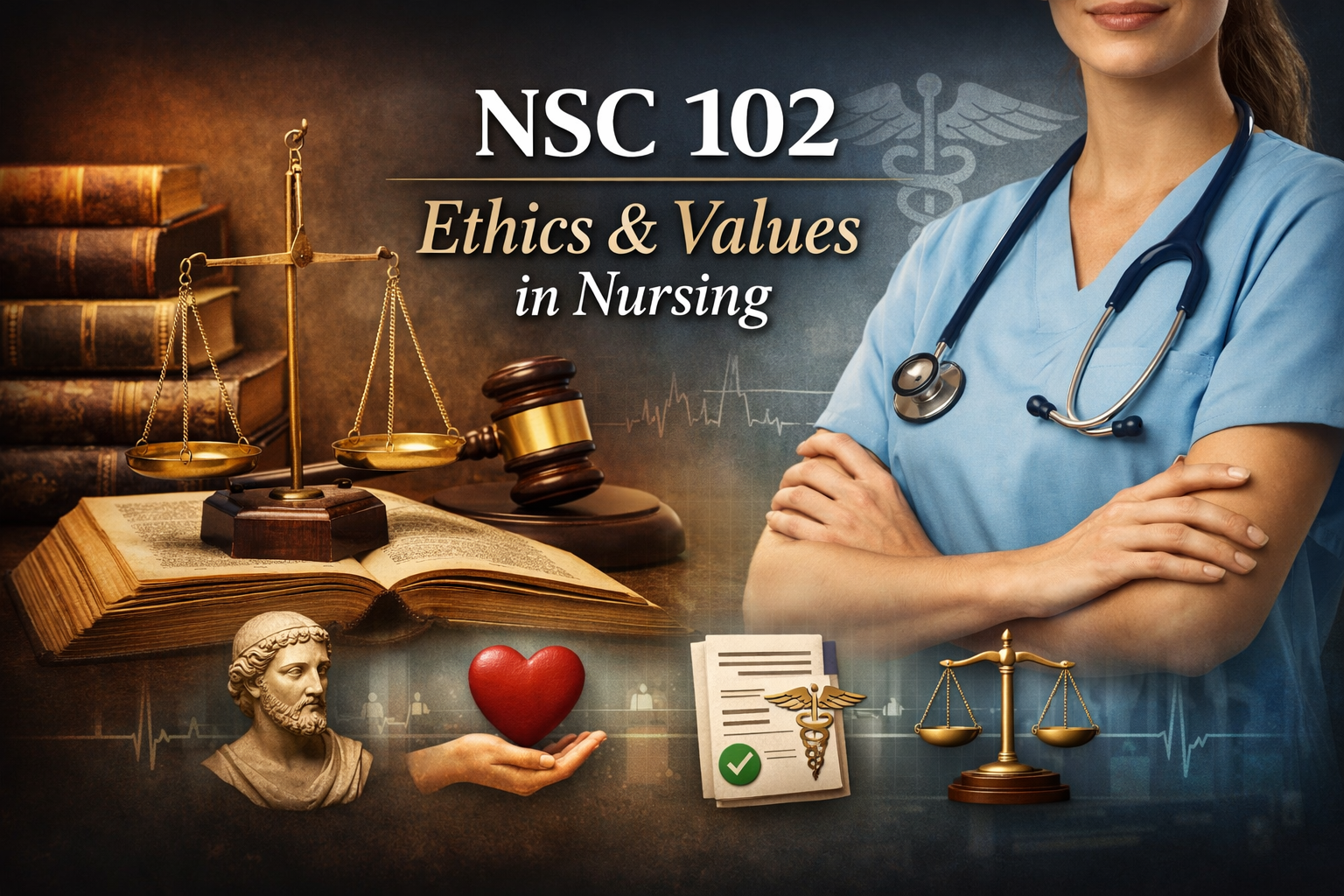
This course introduces nursing students to the philosophical foundations of ethics and morality, their historical development, and their application in healthcare practice. It emphasizes the importance of ethical principles, values, and moral reasoning in guiding professional conduct, patient care, and decision-making in complex clinical situations.
Learning Objectives
By the end of this course, students will be able to:
Explain the history and evolution of ethics from ancient civilizations to modern applied ethics.
Distinguish between ethics and morality, including their definitions, sources, and applications.
Identify and analyze major ethical theories and models (Deontology, Utilitarianism, Virtue Ethics, Rights-Based Ethics, Care Ethics, Principalism).
Understand the development of bioethics, including landmark documents like the Nuremberg Code and Belmont Report.
Apply ethical principles such as autonomy, beneficence, nonmaleficence, and justice in nursing practice.
Explore the role of anthropology in ethics, including cultural relativism and ethical dilemmas in patient care.
Examine moral formation and moral development theories (Piaget, Kohlberg, Freud) and their relevance to nursing.
Appreciate the importance of professional integrity, accountability, and compassion in healthcare.
Course Modules
History of Ethics
Ancient codes (Hammurabi, Ten Commandments)
Greek and Eastern philosophies
Modern ethical theories (Kant, Mill, Aristotle)
Applied ethics in contemporary contexts
History of Bioethics
Hippocratic Oath and early medical ethics
Nuremberg Code & Belmont Report
Rise of bioethics as a discipline
Emerging issues: genetics, AI in healthcare, global health
Core Concepts
Definitions: ethics, morality, values, duties, virtues
Ethics vs. morality: distinctions and comparisons
Types of Ethics
Normative, Metaethics, Applied, Descriptive
Moral psychology and comparative ethics
Ethical Models
Deontology, Utilitarianism, Virtue Ethics
Rights-Based Ethics, Care Ethics, Principalism
Comparative strengths and weaknesses
Ethical Schools of Thought
Consequentialism, Deontology, Virtue Ethics
Relativism, Naturalism, Intuitionism, Existentialism, Pragmatism
Ethical Principles in Nursing
Autonomy, Beneficence, Nonmaleficence, Justice
Fidelity, Veracity, Respect, Responsibility, Confidentiality
Anthropology & Ethics
Cultural relativism vs. universal rights
Ethical challenges in anthropological research
Applied anthropology in nursing dilemmas
Morality
Philosophical perspectives (Kant, Mill, Aristotle)
Types of morality: descriptive, prescriptive, conventional, absolute, relative, divine, humane
Moral formation and development (Piaget, Kohlberg, Freud)
Professional Application
Importance of ethics in nursing
Building trust, accountability, and integrity
Navigating complex decisions in patient care
Assessment Methods
Quizzes & MCQs on ethical theories and principles
Case study analysis of real-world nursing dilemmas
Reflective essays on moral development and professional values
Group discussions on applied bioethics in healthcare
Key Takeaway
Ethics and values are the backbone of nursing practice. This course equips students with the philosophical grounding, ethical reasoning skills, and moral sensitivity required to provide compassionate, just, and professional care in diverse healthcare settings.
- Teacher: Usman Mohammed Usman