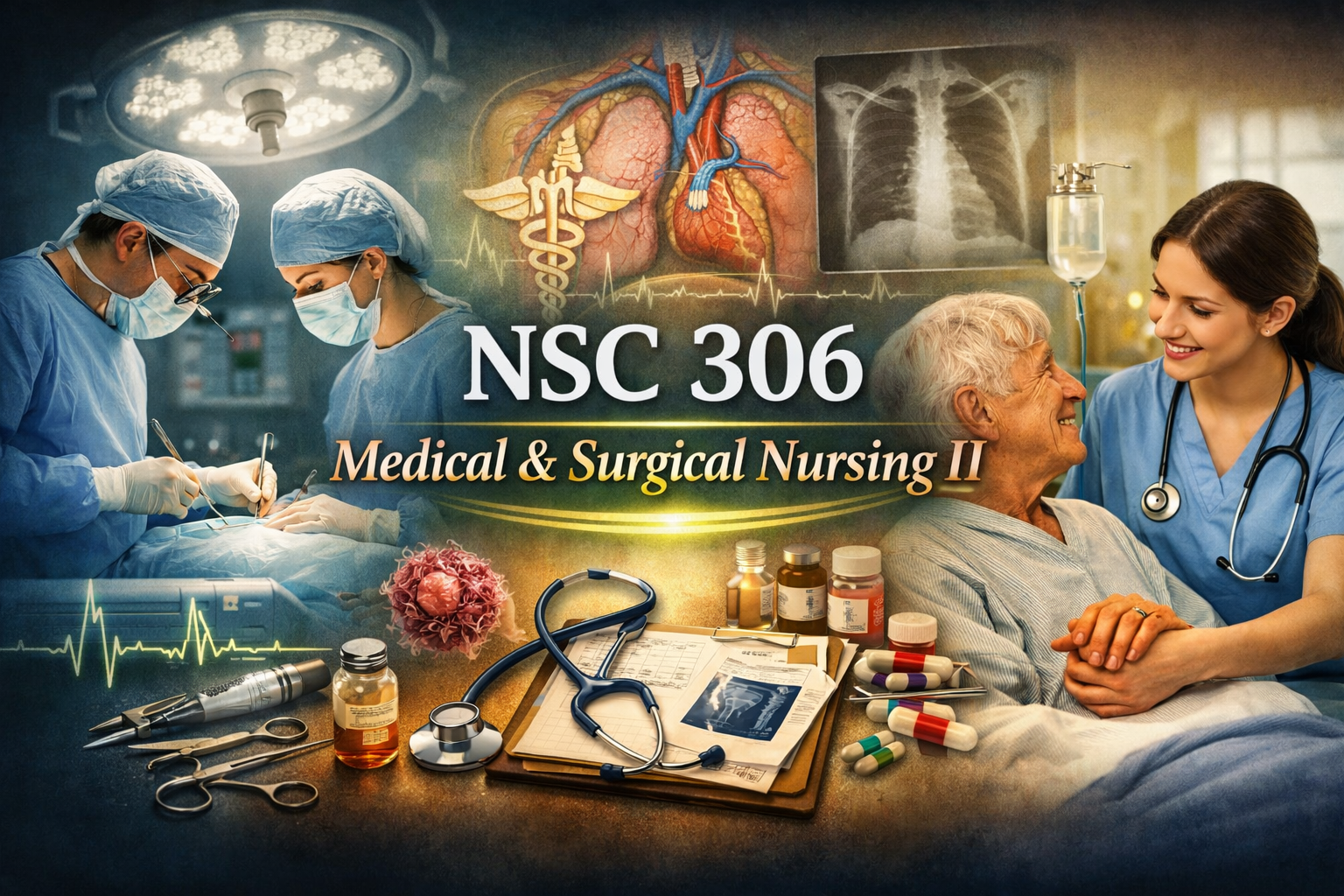
NSC 306 – Medical & Surgical Nursing II
Credit Units: 2 (15 Lecture Hours + 45 Practical Hours)
Course Overview
This course builds upon foundational medical and surgical nursing principles, guiding students toward advanced understanding and application of holistic patient care. It integrates theory, clinical reasoning, and hands‑on practice to prepare future nurses for managing complex health conditions across multiple body systems.
Students will explore the anatomy, physiology, and pathophysiology of major organ systems, linking scientific knowledge to real‑world nursing interventions. Emphasis is placed on recognizing disease manifestations, interpreting diagnostic findings, and applying the nursing process to deliver safe, evidence‑based care.
Learning Outcomes
By the end of the course, students will be able to:
Demonstrate understanding of conditions affecting body systems and their pathophysiological basis.
Identify and describe signs and symptoms of medical and surgical disorders.
Explain diagnostic procedures relevant to each system.
Discuss neoplasms, benign and malignant growths, and pain management strategies.
Apply the nursing process in caring for patients with acute and chronic conditions.
Course Content Highlights
Review of anatomy, physiology, and pathophysiology of major systems.
Oxygenation and blood‑pumping mechanisms.
Disorders and nursing management of the respiratory and cardiovascular systems.
Vascular and inflammatory responses.
Gastrointestinal, genitourinary, and hepatic disorders.
Metabolic and nutritional disturbances.
Endocrine and glucose metabolism disorders.
Neoplastic diseases and pain management.
Comprehensive nursing and medical care for acute and chronic conditions.
Teaching & Learning Approach
Learning is interactive and practice‑oriented, combining:
Lectures and seminars for theoretical grounding.
Clinical demonstrations and simulations for skill mastery.
Case studies and group discussions to enhance critical thinking.
Bedside teaching and patient care experiences to integrate knowledge with empathy.
Key Takeaway
NSC 306 empowers nursing students to bridge the gap between theory and practice — cultivating clinical judgment, compassion, and technical proficiency essential for managing medical and surgical patients in diverse healthcare settings.
- Teacher: Usman Mohammed Usman