Course focus and rationale
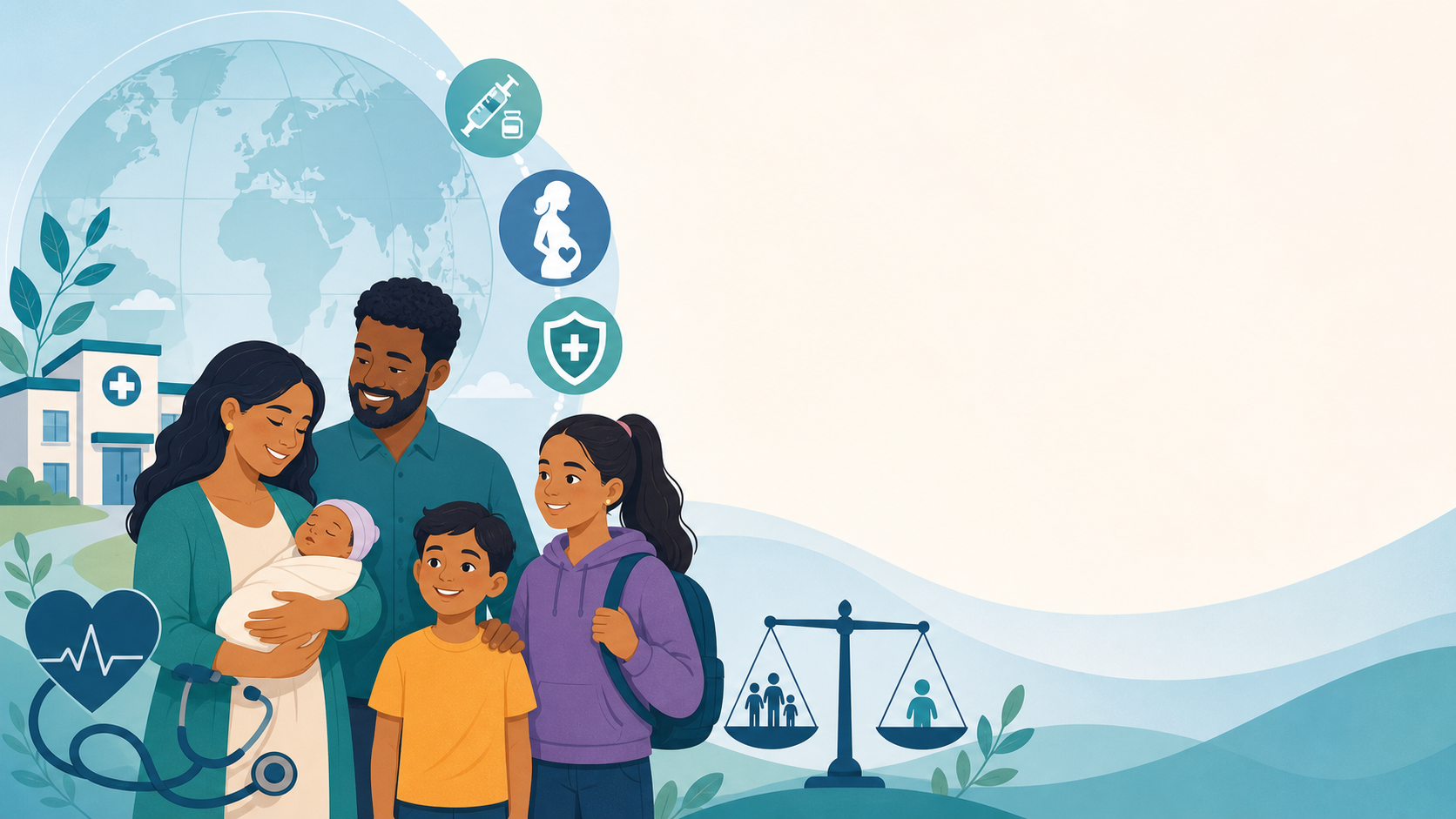
This course introduces the principles and practice of maternal, newborn, child, and adolescent health (MNCAH) within families and communities, with a strong public health and policy orientation. It emphasizes how social determinants, health systems, rights, and evidence‑based interventions shape outcomes for women, children, and families in Nigeria and globally.
Core themes and components
- Foundations of MCH: Definition, scope, and importance of maternal and child health; historical evolution of MCH globally (Alma‑Ata, MDGs, SDGs) and in Nigeria (PHC, NPI, RMNCAH+N, NSHDP II), and why MCH is central to development and SDG 2, 3, and 5.
- Six major components of MCH: Maternal health, child health, family planning, immunization, nutrition, and reproductive health, taught as an integrated continuum of care from adolescence through pregnancy, childbirth, infancy, childhood, and adolescence.
- Social determinants of maternal health: Education, income/SES, access to care, environment, and gender roles, and how they drive inequities in maternal and child outcomes.
Women’s reproductive and mental health
- Women’s and reproductive health: Women’s health issues across the life course; reproductive system concerns; STIs; contraception and abortion; reproductive cancers; reproductive rights; and gender‑based violence, including legal and policy dimensions such as safe abortion care within Nigerian law and human‑rights frameworks.
- Maternal mental health and substance use: Epidemiology and risk factors for perinatal depression, anxiety, psychosis; impact on mothers, fetuses, and children; substance use in pregnancy and its effects; screening tools (EPDS, PHQ‑9, GAD‑7, ASSIST) and stepped‑care management in low‑resource settings.
Pregnancy, childbirth, newborn, and child health
- Preconception to postpartum care: Anatomy and physiology of pregnancy, physiological adaptations in major systems, preconception counseling (risk assessment, immunizations, folate, lifestyle), and maternal–fetal nutrition requirements.
- Labor, birth, and complications: Normal labor and birth processes; major antenatal and intrapartum complications (hypertensive disorders, hemorrhage, endocrine and metabolic disorders, other labor/birth complications) and their public‑health implications.
- Newborn and early child health: Routine newborn care, acquired problems (infections, jaundice), early growth and development, developmental milestones, children with special needs, vaccination and the national immunization schedule, and the role of PHC workers in immunization and follow‑up.
Policy, strategies, and critical appraisal
- Global and Nigerian policy frameworks: SDG 3 targets, WHO Global Strategy for Women’s, Children’s and Adolescents’ Health, and key Nigerian strategies (NSHDP II, RMNCAH+N Strategy).
- Health strategies and program analysis: How to critically appraise MCH strategies (PHC/CHWs, immunization, EmONC, adolescent‑friendly services, etc.) using feasibility, cost‑effectiveness, sustainability and scalability; linking routine public‑health practice to national and global goals.
- Reproductive rights and advocacy: Reproductive health as human rights; access to contraception and safe abortion where legal; advocacy roles for health professionals, including community education and policy engagement.
By the end of the course, students should be able to describe key components and determinants of MCH, analyze how politics, poverty, and inequities affect families, evaluate policies and strategies, and propose context-appropriate, rights-based interventions that improve outcomes for women, children, and adolescents.
- Teacher: Aliyu Muhammad