Course focus and objectives
PIO 216 covers the structure and function of the gastrointestinal (GI) tract and associated organs, the control of motility and secretion, digestion and absorption of nutrients, the liver and biliary system, GI disorders, the gut as an endocrine organ, and basic principles of nutrition, basal metabolic rate, and nitrogen balance. By the end, students should be able to explain how nerves, hormones, and local factors regulate gut function; describe digestion and absorption of major food substances; and relate GI physiology to common clinical conditions.
Structure, control, and secretions of the GI tract
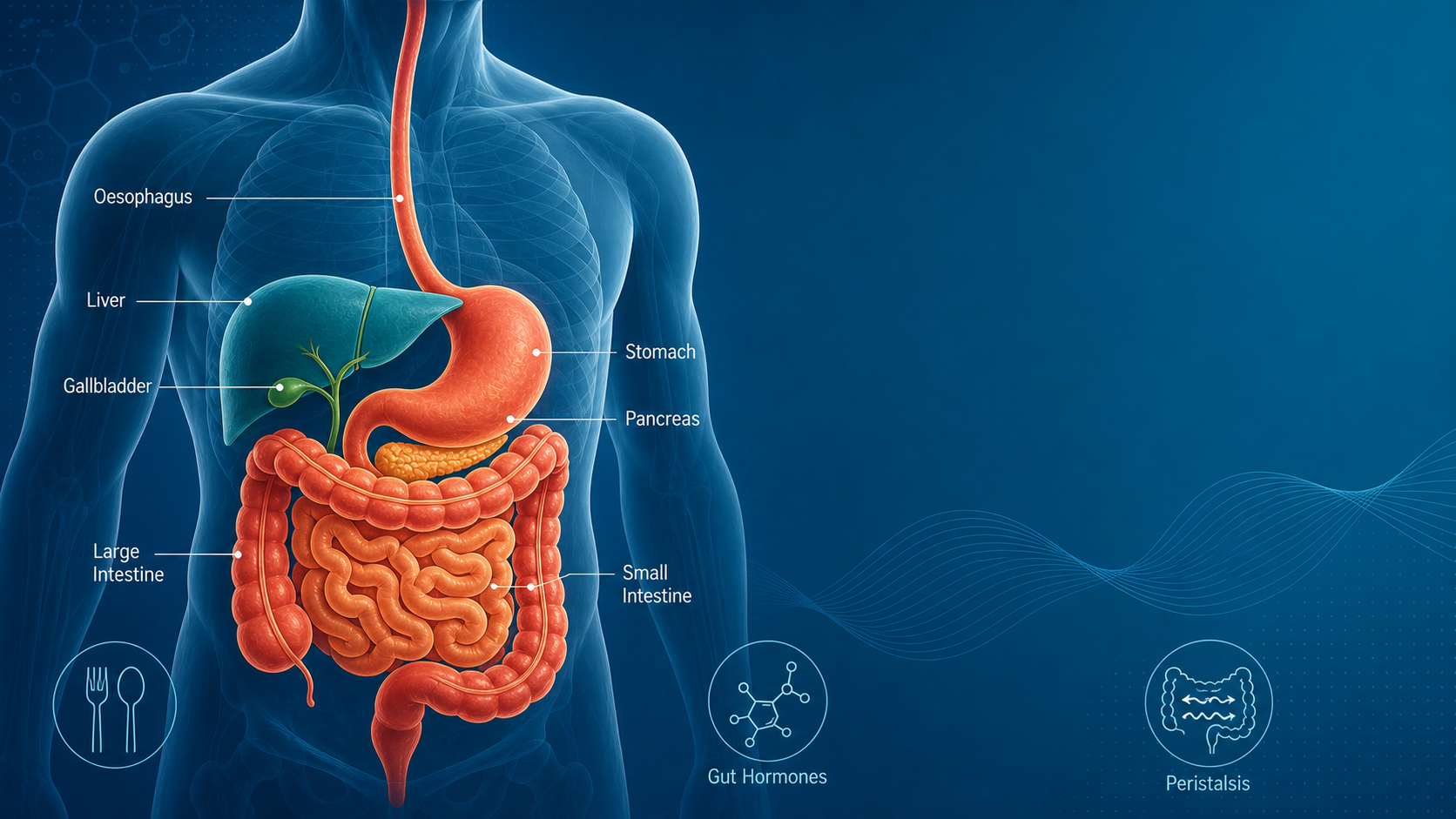
Physiologic anatomy: Primary GI organs (mouth, pharynx, esophagus, stomach, small and large intestines) and accessory organs (teeth, tongue, salivary glands, exocrine pancreas, liver, gallbladder); layered wall (mucosa, submucosa, muscularis, serosa/fibrosa) and smooth‑muscle organization.
Neural and hormonal control: Enteric nervous system (myenteric and submucosal plexuses), autonomic (parasympathetic and sympathetic) inputs, and GI hormones such as gastrin, secretin, CCK, GIP, motilin, and somatostatin regulating motility, secretion, and blood flow.
GI secretions and regulation: Composition and function of saliva, gastric juice, pancreatic juice, bile, intestinal secretions and mucus; cephalic, gastric, and intestinal phases of secretion; neural and hormonal control of exocrine glands.
Motility, digestion, absorption, and liver–biliary function
Motility: Mastication and deglutition (three stages and deglutition reflex); oesophageal peristalsis; gastric receptive relaxation, hunger contractions, digestive peristalsis and regulation of gastric emptying; small‑intestinal mixing and propulsive movements (including migrating motor complex); large‑intestinal segmentation, mass peristalsis and defecation reflex; clinical correlations such as dysphagia, achalasia, GERD and constipation.
Digestion and absorption: Sequential digestion of carbohydrates (amylases, disaccharidases), proteins (pepsin, pancreatic proteases, peptidases) and lipids (lingual, gastric and pancreatic lipases, bile salts) in mouth, stomach and intestines; mechanisms of absorption for monosaccharides, amino acids and lipids (micelles and chylomicrons).
Liver and biliary system: Hepatic lobular structure, portal triad, sinusoidal circulation and enterohepatic circulation; major liver functions (metabolic, storage, synthetic, bile secretion, excretory, heat production, haematological, detoxification); biliary anatomy (hepatic ducts, gallbladder, common bile duct, sphincter of Oddi) and properties, composition, formation and functions of bile and bile salts (emulsification, micelle formation, choleretic/cholagogue actions, prevention of gallstones).
The gut as an endocrine organ, GI disorders, and nutrition
Gut endocrine system: Enteroendocrine and APUD cells (including enterochromaffin cells), locations and actions of key hormones (gastrin, CCK, secretin, GIP, motilin, somatostatin, ghrelin, others), and their systemic roles in appetite, motility, secretion, and metabolism.
Disorders of GIT: Functional and structural conditions such as GERD, IBS, IBD (Crohn’s disease, ulcerative colitis), coeliac disease, gallstones, peptic ulcer disease, lactose intolerance, hepatitis, GI bleeding, diarrhea, constipation, appendicitis, and congenital aganglionic megacolon (Hirschsprung’s disease), with emphasis on underlying physiological disturbances.
Nutrition, BMR and nitrogen balance: Macronutrients (carbohydrates, proteins, fats), micronutrients (vitamins, minerals), fibre and water; energy requirements, basal metabolic rate (definition, determinants and calculation by Harris–Benedict/Mifflin–St Jeor), total daily energy expenditure, nitrogen balance (positive, negative, equilibrium) and amino‑acid deficiency; special dietary needs in children, pregnancy, elderly, athletes and selected disease states.
Overall, PIO 216 integrates classical GI physiology with clinical and nutritional perspectives, showing how structure, control systems, digestion, absorption, liver–biliary function, and endocrine signaling work together to maintain homeostasis and how disturbance at any level produces common GI and nutritional disorders
- Teacher: Aliyu Muhammad